
高校生たちの広がる活動は小中学校へも/ High School Students Expand Activities to Elementary and Junior High Schooⅼ
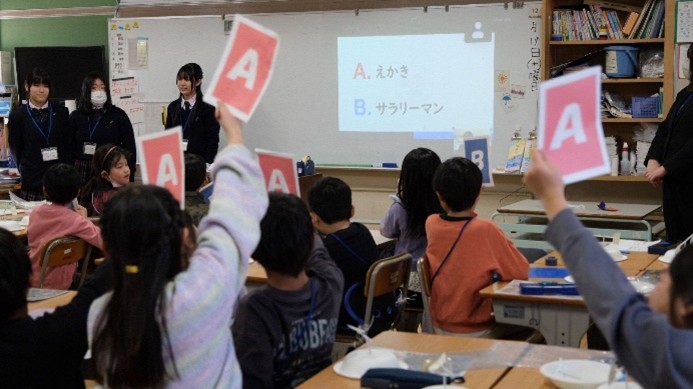
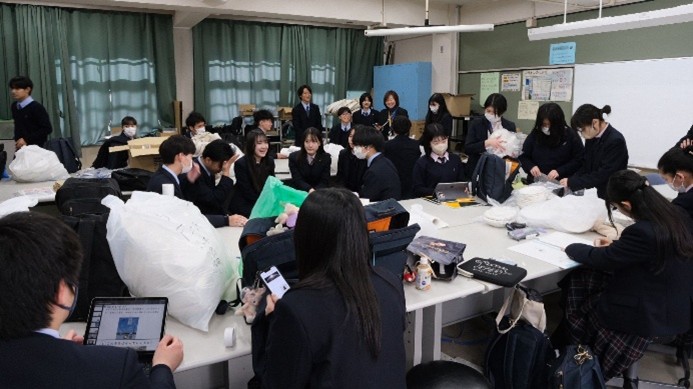
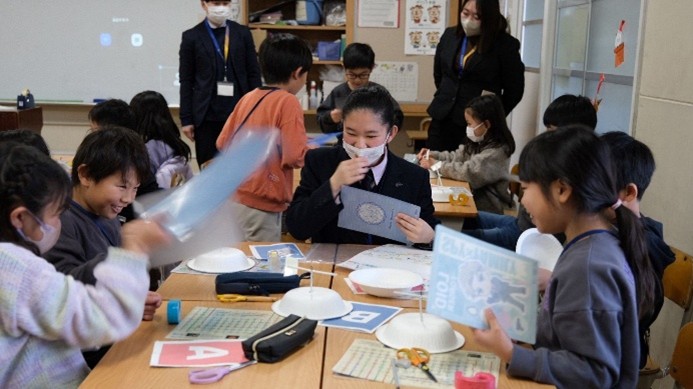
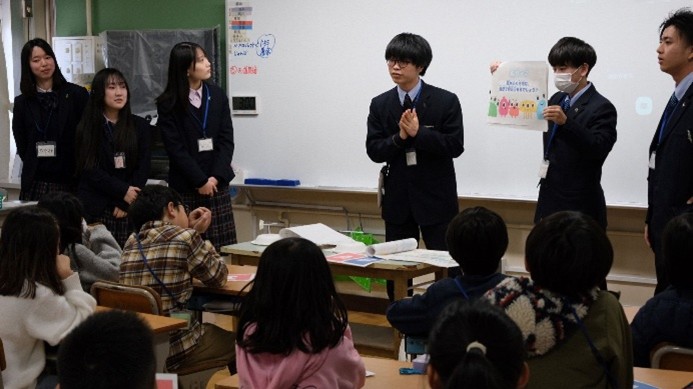
高校生による小学生を対象としたアウトプット活動(吹田市立吹田第二小学校にて)
An outreach activity in elementary school conducted by high school students (at Suita Municipal Suita Second Elementary School).
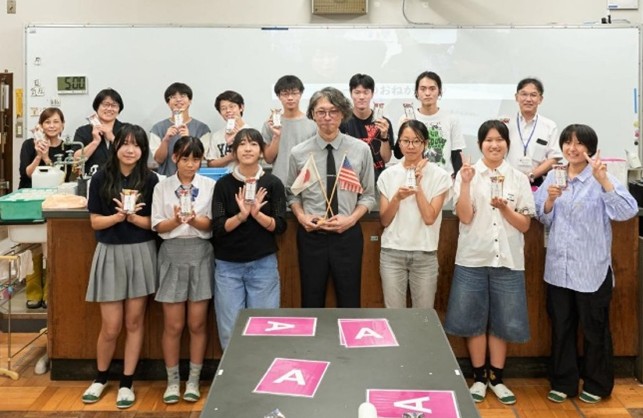
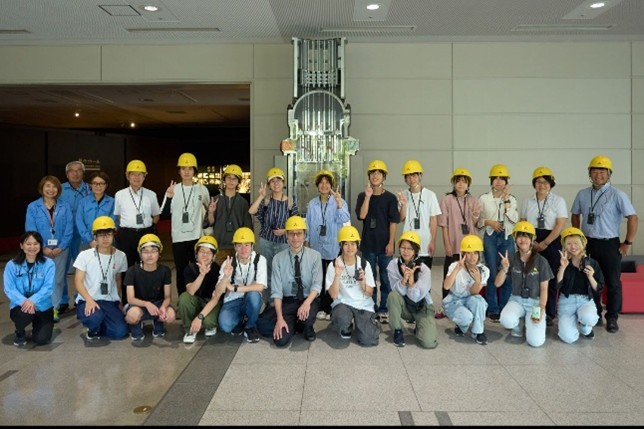
新しくNプロジェクトの仲間になった大阪府立千里高校(SSH指定高校)
Osaka Prefectural Senri High School (an SSH-designated school), which has newly joined the N Project
現在では活動拠点である大阪高等学校をハブ校として、スーパーサイエンスハイスクール(SSH)指定校である大阪府立千里高校へと活動が広がりはじめた。その教育効果は吹田市教育委員会にも達しており、小学校・中学校・地域住民と協働する科学イベントや授業実践を多数展開することにより、本活動が地方自治体レベルにまで広がり、小さいとはいえ確実に社会を動かしはじめた。
このように主体的に活動する高校生たちに教育委員会(大阪府吹田市)からアウトプットする舞台が与えられた。2024年11月29日に公立中学校(吹田市立第六中学校)で1コマ45分さらに12月19日には公立小学校(吹田市立吹田第二小学校)で1コマ45分と異例の待遇であった。対象は中学1年生187名と小学3〜6年生176名。聴講者には中学教員,小学校教員に加えてPTA 役員,教育委員会の関係者の参加もいた。
ただアウトリーチ先が初等教育現場の場合には,その題材をより馴染みある「天気」に変更した。とはいえ,教科書に掲載されている内容ではなく,ここに参加する研究者が日々観測している大気状態を取り上げた。研究現場の生の声を届けるからこそ,生徒たちに熱量が伝わり,より主体的なインプットが誘発できると考えている。
知識の習得度合いが学年により全く異なるというハードな状況下,その舞台に立つ高校生たちには,各学年の理科の学習状況を踏まえた上,①本活動に主体的に参画した動機,②インプットした学び(天気)を基にした誰もが正解できる二者択一のクイズ,③作成する学びのキット(風向計)の取り扱い説明書を各々手づくりでスケッチブックにまとめるよう指示した。同じ題材を同時刻に同じ場所で一斉にアウトプットするため,聴講者に飽きられないよう,そして高校生たちの個性が損なわれないようにするための工夫であった。数百種類に及ぶ個性豊かなスケッチブックは「魂」が込められた学習材料となっただけではなく,今やその価値は小中学生からも認められたわけである。
アウトプット終了後,前のめりで話を聞いてくれた中学生,小学生の姿と共に,会場で巻き起こった聴講者からの賞賛によって確かな手応えを感じ,ここでも文字通り参加した全ての高校生たちが口を揃えて「もっと対話する時間がほしい」と懇願してきた。アウトプットを重視した科学的リテラシー涵養の教育効果の真髄が、この若者の自己肯定感向上であることはもはや言うまでもない。
At present, with Osaka High School serving as the hub, the project has begun to expand its activities to Senri Senior High School, a designated Super Science High School (SSH). Its educational impact has also reached the Suita City Board of Education. Through numerous science events and classroom practices in collaboration with elementary schools, junior high schools, and local residents, the project has extended to the level of local government and, though still modest in scale, has unmistakably begun to move society.
In recognition of these proactive efforts, the Suita City Board of Education provided high school students with the opportunity to present their work on official educational stages. On November 29, 2024, they conducted a 45-minute lesson at a public junior high school (Suita City Dairoku Junior High School), followed by another 45-minute lesson on December 19 at a public elementary school (Suita City Daini Elementary School). This was an exceptional arrangement. The audiences consisted of 187 first-year junior high school students and 176 elementary students from grades three to six. In addition to the pupils, junior high and elementary school teachers, PTA representatives, and members of the Board of Education also attended.
When the outreach target was an elementary school setting, the theme was modified to the more familiar topic of “weather.” Importantly, however, the content did not come directly from textbooks, but rather from actual atmospheric observations conducted daily by participating researchers. It was precisely this delivery of firsthand insights from the research frontlines that conveyed passion to the pupils and fostered more engaged learning.
Given the challenge that levels of knowledge acquisition vary significantly by grade, the high school presenters were instructed to tailor their lessons with three elements: (1) their personal motivation for actively participating in the project, (2) a simple two-choice quiz based on the weather-related knowledge they had acquired, and (3) an instruction manual for a learning kit (a homemade weather vane), all compiled individually into handmade sketchbooks. Since all groups presented simultaneously in the same venue with the same theme, these measures were intended both to avoid losing the audience’s interest and to ensure that the individuality of each student presenter shone through. The hundreds of sketchbooks thus produced became not only vibrant, soul-filled educational resources but also materials whose value was recognized by the elementary and junior high school students themselves.
After the presentations, the enthusiastic attention of the younger students, along with the praise that erupted from teachers, parents, and officials in attendance, gave the high school students a palpable sense of achievement. Without exception, they expressed a strong desire for “more time for dialogue.” It goes without saying that the essence of the educational impact of this output-centered approach to fostering scientific literacy lies in enhancing young people’s sense of self-worth.