
Nプロジェクト活動の内容と特徴 /Activities and Key Features of the N Project
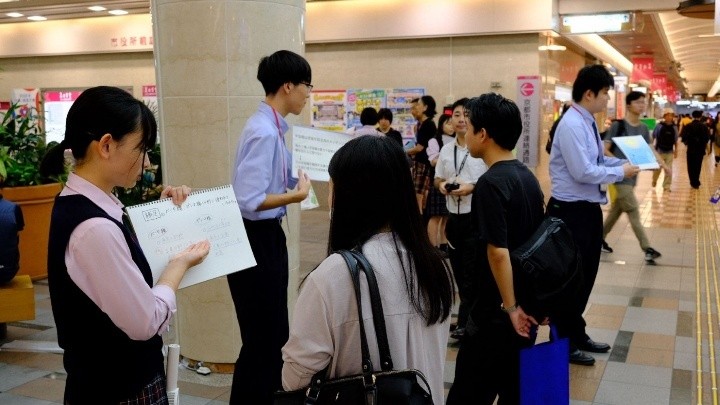
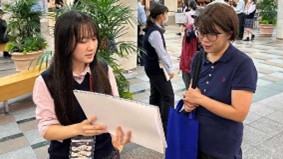
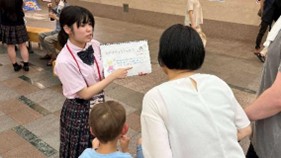
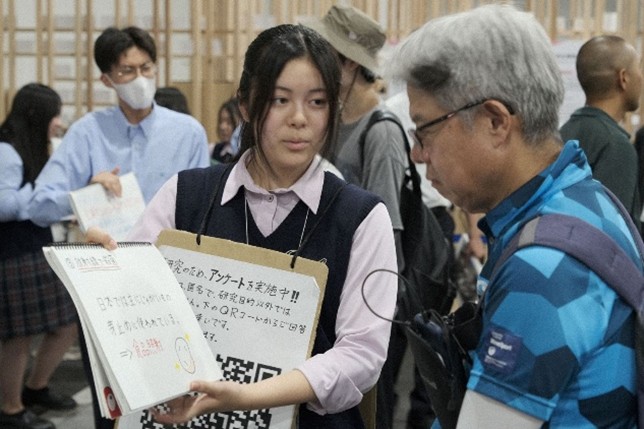
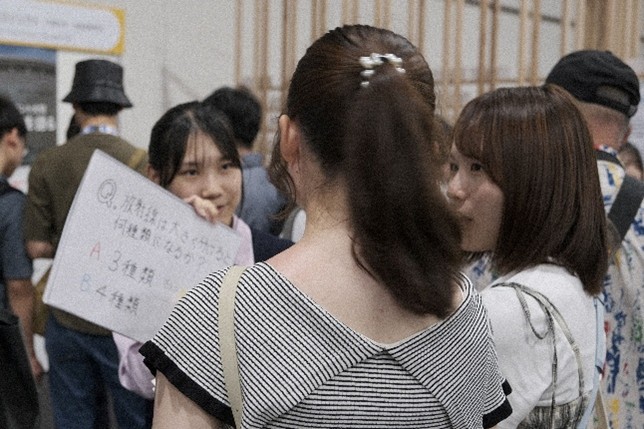
地下街でスケッチブックを用いアウトプットする文系生徒。高校生の熱い語らいは人々を動かし、自らが働きかけることで社会が確かに呼応することの驚きを体験した。さらに本人たちは自己肯定感の劇的な向上を獲得する。これまで科学の理解働きかけに対して比較的反応の鈍かった中高年女性層に対する新たなアプローチとなった。
In the shopping street, humanities-track students used sketchbooks to present their output. The passionate discussions of the high school students moved people, and they experienced the surprise of society responding tangibly to their own initiatives. Moreover, they gained a dramatic boost in self-esteem. This also became a new approach to reaching middle-aged and older women, a group that had previously shown relatively little response to efforts at promoting scientific understanding.
本プロジェクトでは,高校生や高校教員だけでなく一般の方々にも科学が身近なものとして受け入れられるよう,日常と非日常世界の架け橋となるような学びが必要であると考えた。その題材に選定したのが,中村助教が主導する先端科学「自然放射線による汎用プラスチックに秘められた未知の機能解明」である。プラスチックは先端的でありながらも日常的であり,その鍵となる放射線は社会的にセンシティブな上,非日常的と思われがちだからであった。
また、文系生が理系生と同じスタートラインに立てるよう、社会的に敏感でありながら内容が曖昧で理解が難しい「放射線」をあえて題材に選定し、新たな対話型学習モデルを構築した。生徒たちは、フリップを活用した体感型授業で得た知識を咀嚼し、その内容をスケッチブックにまとめ、街頭で通行人に語りかけるアウトプットを実践している。
インプットするだけの画一的な学びでは、元から科学に関心をもつ層が一時的に経験値を蓄積するだけで留まってしまう。二年越しで確立したプロトモデルは、アウトプットを重視した対話を基本とした学びであった。フリップを活用し、手足を常に動かす体感型授業を通じてインプットした学びをアクティブラーニングによって高校生自ら咀嚼して知識を確信へと変貌させ、さらにその内容から「科学と社会の関係」をスケッチブックにまとめ、それを用いて街頭で街行く人に自ら語り掛けるというアウトプットにより学びをもう一段深化させている。
その反復過程が、高校生を自らの意思で行動する主体的な活動へと駆り立てた。自らが獲得した知識を皆にもわかってほしいという利他的なマインドが他者を巻き込み、自らの働きかけによって社会が呼応するという刺激が「小さいながらも社会を動かしたという喜び」と「学びへの没入感」を誘う。科学を知りたいという意志に、もはや文系や理系という枠組みは関係なかった。
In this project, “radiation”—a socially sensitive topic that is often vague and difficult to understand—was chosen as the theme in order to place humanities students on the same starting line as science students. A new dialogue-based learning model was developed, in which students digest the knowledge gained through experienced-based classes using flip charts, organize it in sketchbooks, and then share it directly with passersby on the street.
Unlike one-way, input-heavy learning, which only allows students already interested in science to temporarily accumulate knowledge, this prototype model—established over two years—emphasizes dialogue and output. Through active learning, students transform what they have taken in during experiential, experience-based classes into deeper conviction, then compile their understanding of “the relationship between science and society” in sketchbooks, which they use to engage people in conversation on the street. This cycle of expression further strengthens and deepens their learning.
The repetition of this process drives students to act on their own initiative. An altruistic mindset—wanting others to understand the knowledge they themselves have gained—draws in people around them. The response of society to their efforts sparks both “the joy of having moved society, even in a small way” and “a sense of immersion in learning.” In the pursuit of scientific understanding, the traditional divide between humanities and sciences no longer mattered.